Pinterest Funnel Comparison for Pottery Teachers Selling Glaze Classes
Compare five Pinterest monetization paths for pottery teachers: glaze charts, mini-projects, sales pages, supply guides, and challenge waitlists.

Pinterest is full of people saving dreamy mugs, speckled bowls, and glaze test tiles long before they are ready to buy an online ceramics class.
That timing is not a problem. It just means a pottery teacher needs the right bridge between inspiration and enrollment.
A pin about ceramic glaze combinations may attract five different people:
- A total beginner who does not know what clay body means yet
- A hobby potter looking for safer glaze pairings
- A studio member planning a fall project
- A gift maker thinking about handmade holiday mugs
- A serious learner comparing online pottery memberships
If all five land on the same sales page, most will leave. If every pin only offers a free PDF, you may grow a list that never buys. The better move is to choose a funnel based on the search moment.
Below is a practical comparison for pottery teachers, ceramic artists, and small studio owners selling glaze classes, handbuilding lessons, memberships, templates, or beginner workshops.
First, name the offer you actually want to sell
Before comparing funnels, get specific about the paid destination. Pottery content can drift into endless inspiration if the offer is vague.
Choose one primary revenue goal for the next 30 days:
- A $49 to $149 glaze foundations class
- A $12 to $29 mini project, such as a slab mug template or test-tile lesson
- A $20 to $40 monthly ceramics membership
- A local fall workshop or studio waitlist
- A supply guide with affiliate revenue plus email list growth
The goal changes the funnel. A student who searches for beginner pottery glazing mistakes may need teaching and trust. Someone searching for online pottery glazing class may be closer to buying. Someone searching for best underglaze colors for beginners may monetize through a supply guide before they ever join your course.
Five Pinterest funnel routes compared
1. Free glaze chart to email sequence
This is the classic Pinterest lead magnet path: pin to a helpful free resource, collect the email, then teach toward the paid class.
For pottery teachers, the best freebie is usually not a broad ebook. Make it small enough to use in one studio session.
Good examples:
- 7 beginner-friendly glaze combinations for speckled clay
- A test-tile tracking sheet for glaze experiments
- Cone 6 glaze planning checklist for hobby potters
- Beginner underglaze color mixing chart
- Mug glazing mistakes checklist
The landing page should show the finished result, list who the chart is for, and explain what it will not cover. With ceramics, trust matters. Mention clay body, firing temperature, studio rules, food-safety considerations, and why students should follow manufacturer or studio guidance.
This funnel fits when your paid class needs education before purchase. It is also useful if you sell evergreen course traffic from Pinterest rather than relying on launch windows.
Weak spot: freebie collectors may save everything and buy nothing. Keep the email sequence practical and tied to a real next step.
A simple five-email sequence:
- Deliver the chart and show one example project
- Explain one common glazing mistake
- Share a before-and-after test tile story
- Invite a reply about their clay, kiln, or studio setup
- Offer the paid glaze class or membership with a clear outcome
Track Pinterest outbound clicks, opt-in rate, email replies, and sales by UTM source.
2. Low-cost mini project to paid course or membership
A mini project is often stronger than a freebie when your audience already owns basic tools and wants a finished result.
Instead of asking for an email first, send Pinterest traffic to a small paid product:
- $9 slab mug template
- $15 handbuilt incense holder lesson
- $19 test-tile mini class
- $27 beginner bowl glazing workshop replay
- $12 printable glaze notebook
This works well for searches with making intent, such as handbuilding project for beginners, ceramic mug template, slab pottery ideas, pottery gift ideas, or glaze test tile ideas.
The mini project should be complete on its own. Do not make it feel like a paid brochure for the bigger class. The upsell can happen after purchase:
- Order confirmation page: Want the full glaze foundations class?
- Email one day later: Here is how to adapt the project for a different clay body
- Email three days later: Join the membership for monthly guided projects
This path is good for teachers who need revenue sooner and do not want to wait for a long nurture sequence.
Weak spot: it creates more customer support than a free PDF. Be clear about required materials, kiln access, digital delivery, and whether the project is suitable for beginners.
3. Direct-to-class sales page
Some Pinterest traffic is ready for a course page. Not most of it, but enough to deserve its own route.
This funnel is for high-intent searches:
- online pottery glazing class
- beginner ceramics course online
- pottery glazing workshop
- learn ceramic glazing at home
- cone 6 glaze class
Your pin should not look like generic inspiration if the destination is a sales page. It should signal instruction.
Example pin angles:
- Learn Glaze Layering Without Wasting Another Kiln Load
- Beginner Pottery Glazing Class for Hobby Studio Members
- Cone 6 Glaze Foundations: Online Class for Potters
- Stop Guessing Which Glazes Work Together
The landing page needs more than pretty finished mugs. Include:
- Who the class is for and not for
- Required studio access or equipment
- Lesson list
- Student project examples
- Safety and materials notes
- Refund policy or preview lesson
- A simple enrollment button near the top and after the curriculum
This route fits when you already have proof: student photos, testimonials, workshop history, or a clear curriculum.
Weak spot: if your sales page tries to serve beginners, intermediate potters, studio managers, and gift makers at once, Pinterest traffic will bounce.
4. Supply guide with affiliate or product revenue
Many pottery searches are not course searches. They are supply searches.
Examples:
- best beginner pottery tools
- underglaze colors for beginners
- pottery carving tools guide
- glaze brush types
- pottery starter kit for handbuilding
- what to bring to open studio
A supply guide can monetize through affiliate links, your own kits, product pins, or a small email opt-in.
This is useful if you have a ceramics audience but your course is not open year-round, or if your paid class requires materials students do not yet understand.
The page should be honest and organized by use case:
- Starter tools for a first handbuilding class
- Glaze tools for test tiles
- Brushes for smooth coverage
- Storage and labeling supplies
- What not to buy yet
Avoid turning the guide into a wall of links. Pinterest users came for clarity. If you recommend ten nearly identical tools, you are creating more confusion.
Weak spot: affiliate revenue can distract from the bigger business. If a reader clicks out to a marketplace and never joins your list, you have rented attention instead of building an audience. Add a relevant opt-in, such as a printable pottery supply checklist or glaze notebook template.
5. Seasonal challenge or workshop waitlist
A challenge funnel works when your pottery offer is time-bound.
In mid-August, the useful seasonal angles are fall hobby planning and handmade gift prep. People are starting to think about cozy indoor projects, studio classes, and holiday gifts without being in December panic mode yet.
Challenge examples:
- 5-day handmade mug planning challenge
- Fall handbuilding project week
- Glaze your holiday gifts without last-minute chaos
- Test-tile weekend for beginner potters
- Make a clay ornament set from start to finish
Pinterest pins lead to a challenge signup or workshop waitlist. The event teaches a small part of the process and then offers a paid class, membership, or local workshop.
This path is especially good for local studios because it can warm up people before registration opens. Use local Pinterest SEO where it makes sense, but do not make every pin hyperlocal. A pin titled Fall pottery workshop ideas can travel farther than one titled Pottery workshop in one small neighborhood.
Weak spot: challenge funnels need a calendar. If you will not send reminders, host the event, or follow up with a real offer, choose a simpler evergreen route.
Decision matrix: which funnel should you build first?
| Funnel route | Best Pinterest searches | Best fit | Avoid if | Main metric |
|---|---|---|---|---|
| Free glaze chart | glaze combinations, glazing mistakes, test tile chart | You sell a higher-priced class or membership that needs trust | You have no email sequence or offer yet | Opt-in rate and sales from email |
| Low-cost mini project | slab mug template, handbuilding project, pottery gift ideas | You want faster revenue and have a clear project | Your students need lots of individual troubleshooting | Earnings per visitor and refund/support rate |
| Direct class page | online pottery class, glazing workshop, cone 6 glaze class | Your course page is proven and specific | Your offer is broad or untested | Enrollment conversion rate |
| Supply guide | beginner pottery tools, underglaze brands, glaze brushes | You can earn affiliate or kit revenue and educate buyers | You will send everyone away with no email capture | Affiliate clicks plus email signups |
| Challenge waitlist | fall pottery projects, handmade gift prep, studio workshop ideas | You have a launch, cohort, or local class date | You cannot support event reminders and follow-up | Signup-to-attendance and offer conversion |
If you are starting from zero, do not build all five. Pick one primary route and one supporting route.
For most solo pottery teachers, I would start with:
- A free glaze chart for broad Pinterest discovery
- A paid mini project for warmer handbuilding searches
- A direct class page only for high-intent course keywords
That gives you list growth, small revenue, and a clean path for ready buyers without overbuilding.
Match pin intent to the page, not just the topic
The topic pottery glazing is too broad. The pin promise should match the next action.
Here are examples of clean matches:
| Pin title | Searcher likely wants | Best destination |
|---|---|---|
| 7 Glaze Combinations for Speckled Clay | Ideas to save and test later | Free glaze chart opt-in |
| Beginner Test Tile Template for Pottery Glazes | A practical studio tool | Free or low-cost printable |
| Handbuilt Mug Project for Fall Studio Nights | A guided project | Mini project sales page |
| Online Glaze Class for Beginner Potters | Instruction and confidence | Course sales page |
| Pottery Tools to Bring to Your First Open Studio | Buying guidance | Supply guide with opt-in |
| Handmade Mug Challenge Before Holiday Gift Season | A seasonal nudge | Challenge signup page |
This is where Pinterest SEO matters. Use Pinterest keyword research to find the exact language people use, then write Pinterest pin titles and descriptions around the search moment. Ceramic glaze ideas, pottery glaze combinations, and underglaze ideas may look similar to you, but they can represent different levels of skill and intent.
What each landing page must do
A Pinterest landing page does not need to be long. It needs to reduce uncertainty.
For pottery and ceramics, uncertainty usually sounds like:
- Do I need my own kiln?
- Will this work with my clay body?
- Is this food safe?
- Can a beginner do this?
- What tools do I need?
- Is this for wheel throwing or handbuilding?
- Will my community studio allow these materials?
Address those questions near the top. Do not hide them in FAQs after the checkout button.
For a lead magnet page, use:
- One finished visual
- Three bullets about what the download helps with
- A short materials note
- Email signup form
- A next step after signup
For a mini project page, use:
- Finished project photo
- Skill level
- Materials list
- Time estimate
- What is included
- Digital delivery details
- One clear buy button
For a course page, use:
- Outcome-focused headline
- Who it is for
- Module list
- Student examples
- Requirements and safety notes
- Price and guarantee or preview
- Enrollment button
The tracking setup: simple but non-negotiable
Use Pinterest UTMs from day one. You do not need a complicated dashboard to learn which funnel is working.
Create separate UTM campaigns for each route:
- pinterest_glaze_chart
- pinterest_mini_project
- pinterest_direct_class
- pinterest_supply_guide
- pinterest_challenge_waitlist
Then review weekly:
- Saves: Are people interested enough to keep the idea?
- Outbound clicks: Did the pin create action?
- Landing-page conversion: Did the page match the promise?
- Email revenue: Did subscribers buy later?
- Support questions: Did the page create confusion?
If you are batching these variations, PinPinMe can help turn one landing page into multiple search-ready pin drafts with titles, descriptions, and tracking notes so you are not rebuilding from scratch every week.
A practical 14-day build plan
Days 1-2: Pick one paid offer and two buyer moments
Example:
Paid offer: Glaze Foundations for Beginner Potters
Buyer moments:
- I need glaze combination ideas
- I keep ruining pieces at the glazing stage
Ignore every other angle for now.
Days 3-4: Build one lead magnet or mini project
Choose based on price and readiness.
If the class is $99 or more, start with a free glaze chart.
If you already sell low-cost digital products, start with a $12 to $19 test-tile notebook or handbuilding template.
Days 5-6: Write the landing page
Do not polish for a week. Publish a clear page with the right questions answered.
Include skill level, materials, kiln or studio requirements, and what happens after signup or purchase.
Days 7-9: Create 12 pins for one destination
Make three pin styles for four search angles.
Example angles:
- Glaze combinations
- Glazing mistakes
- Test-tile planning
- Beginner pottery confidence
Use different Pinterest descriptions, not just different graphics. One description can emphasize studio planning. Another can emphasize saving clay pieces from disappointing results. Another can mention beginner-friendly glaze testing.
Days 10-11: Create a small email sequence
For a freebie, write at least three emails before you drive traffic:
- Deliver the chart
- Teach one mistake
- Invite the paid class or mini product
For a mini project, write two follow-ups:
- How to use the project well
- What to learn next in the full class or membership
Days 12-14: Publish, tag, and review the first signals
Do not judge sales in two days. Judge setup quality.
Check:
- Are the pins going to the right URL?
- Are UTMs showing up correctly?
- Does the mobile page load fast?
- Is the opt-in form working?
- Is the offer visible without endless scrolling?
- Are people clicking but not converting?
Early Pinterest analytics are directional. Let pins breathe, but fix obvious page mismatches immediately.
What I would not build yet
A pottery teacher can lose weeks creating assets that do not improve revenue.
I would avoid these until the core funnel works:
- A 40-page beginner ceramics ebook with no paid next step
- A quiz with vague results like creative explorer or mindful maker
- Ten boards for every technique you might teach someday
- Pins that only show finished mugs with no instructional promise
- Affiliate posts that send all serious buyers away before they know you teach
- A launch challenge with no calendar, reminders, or follow-up offer
Keep the path short: useful pin, matched landing page, clear next step, measured result.
Recommended next move
If you teach pottery and want Pinterest traffic to turn into revenue, start with the search moment closest to your current offer.
Selling a glaze course? Build the glaze chart funnel.
Selling templates or project PDFs? Build the mini project funnel.
Selling a local fall workshop? Build the seasonal waitlist funnel now, while hobby planning and handmade gift searches are beginning to rise.
The best funnel is not the most sophisticated one. It is the one that respects where the Pinterest user is today and gives them a useful next step they can actually take.

Case Study: How a Photographer Template Shop Turned Free Welcome Guides Into Bundle Sales
A composite Pinterest funnel teardown for Canva template sellers who need fewer freebie collectors and more purchases of client-guide, pricing, and mini-session bundles.
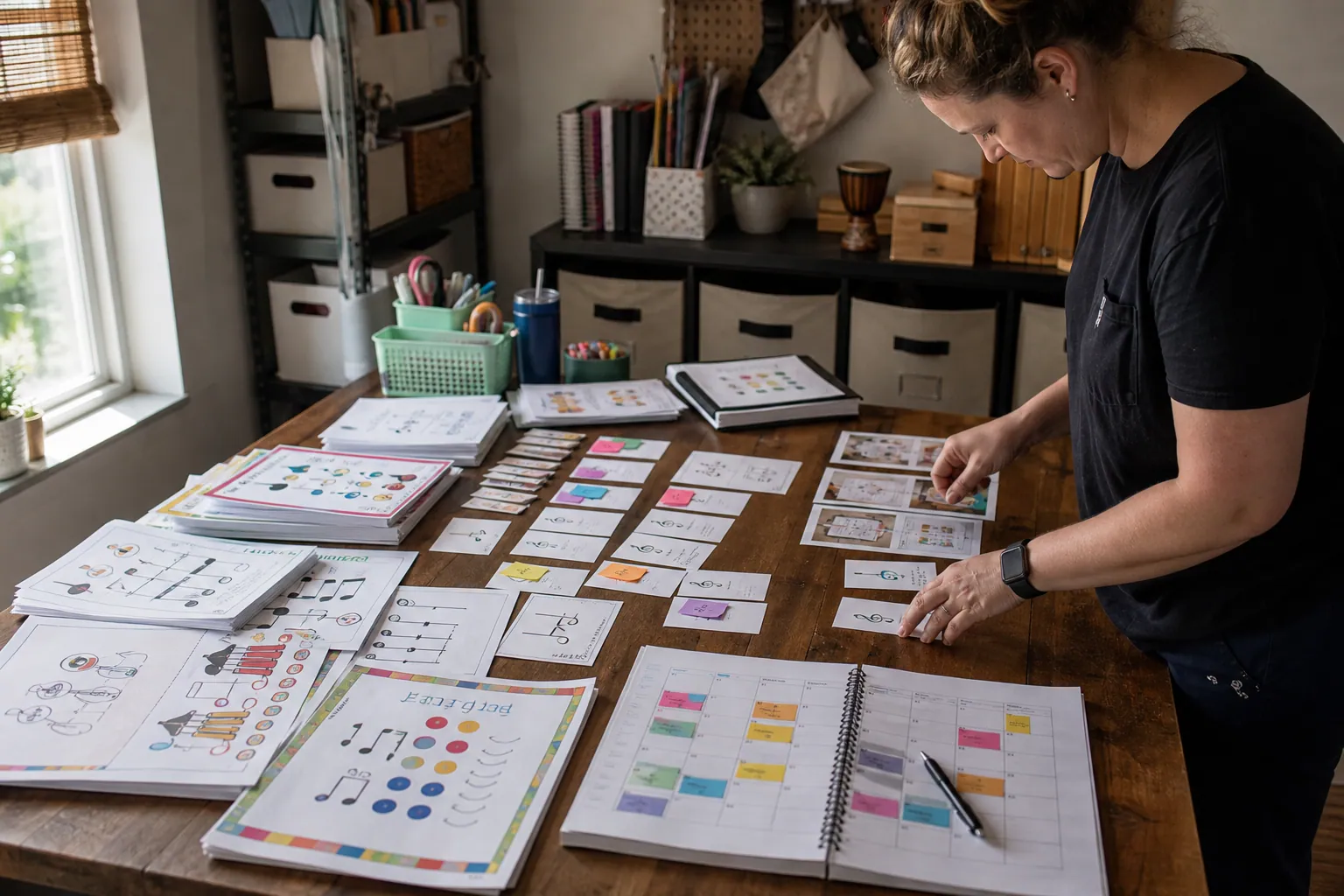
Case Study: How an Elementary Music Printable Shop Turned Pinterest Freebies Into Bundle Sales
A composite teardown of a music printable seller that stopped sending every Pinterest visitor to one freebie and built intent-led paths to bundle sales.

Case Study: How a Vacation Rental Template Shop Turned Pinterest Clicks Into Bundle Sales
A composite teardown of a vacation rental template seller that stopped sending every Pinterest visitor to one freebie and built intent-led routes to higher-value bundles.

The October Pinterest Funnel for Royal Icing Template Shops
Turn holiday cookie-planning searches into template sales with a two-lane Pinterest funnel for ready buyers and beginner decorators.

Case Study: How a Podcasting Course Creator Turned Planning Pins Into Evergreen Enrollments
A composite teardown of a podcasting educator who replaced aesthetic creator Pins with planning resources that attracted more course-ready subscribers and buyers.

Case Study: How an Etsy Product Photography Course Turned Styling Saves Into Evergreen Enrollments
A composite teardown of a product photography educator who replaced generic styling inspiration with decision-led Pinterest content that produced better leads and course sales.